Robocall Guide
What is the TCPA?
The TCPA is the federal law that bans most robocalls and spam texts to your cell phone without your permission. It does something unusual for a federal law: it lets you, the person being called, sue and collect $500 to $1,500 for every illegal call, even if you were never the company’s customer.
Free · No obligation · About 2 minutes · No fee unless you recover
Short answer
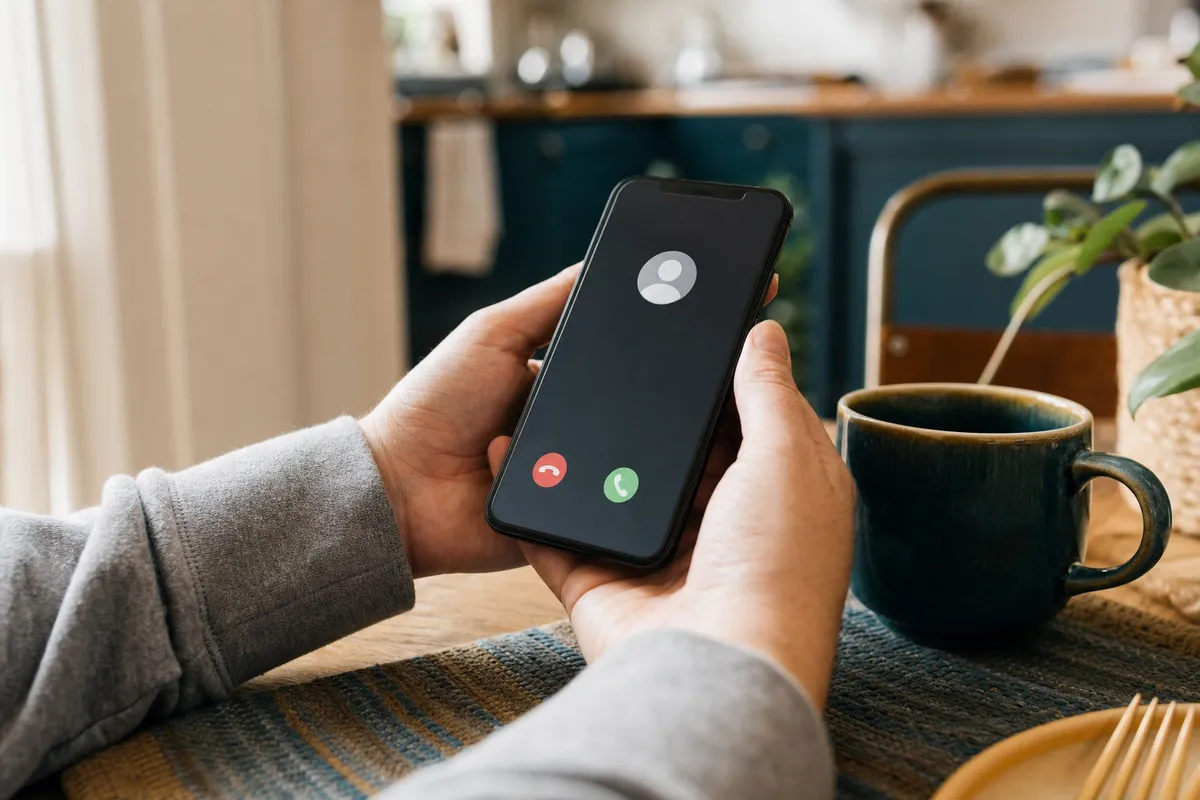
The TCPA stands for the Telephone Consumer Protection Act, a 1991 federal law that restricts robocalls, autodialed calls, prerecorded messages, and unsolicited texts. Its most powerful feature for ordinary people is the private right of action: your own right to take a robocaller to court and recover $500 per call, or up to $1,500 when the violation was willful. The damages stack, so the calls add up.
The short version
- The TCPA is a federal law. It works the same in every state, nationwide.
- It bans most autodialed and prerecorded calls and texts to your cell without written permission.
- It gives you the right to sue directly. That is the “private right of action.”
- Damages are set by the statute: $500 per call, up to $1,500 for willful violations, and they stack.
What the letters actually stand for
TCPA is short for the Telephone Consumer Protection Act. Congress passed it in 1991, back when fax machines and early robocallers were the nuisance, and it has been updated since to cover cell phones and text messages. The point of the law has never changed: stop companies from blasting automated calls and messages at people who never asked for them.
What the TCPA actually bans
The law does not outlaw every phone call. It targets the automated, mass-dialing kind sent without your say-so. The calls and texts it restricts to your cell phone generally include:
- Calls placed with an autodialer (software that dials numbers automatically, without a person punching them in one at a time).
- Prerecorded or artificial-voice messages, the recorded “your car’s warranty is about to expire” type.
- Marketing texts you never agreed to receive.
- Calls that keep coming after you’ve told the company to stop, or asked to be put on its do-not-call list.
The common thread is consent: if you didn’t give written permission, and the call was automated, it likely crossed a line the TCPA draws.
Who the law protects
The short answer is: you, the person whose phone is ringing. You don’t have to be a customer, you don’t have to have bought anything, and you don’t have to have ever heard of the company. Two groups the TCPA protects that surprise people:
- Wrong-number recipients. If a debt collector or telemarketer is auto-dialing you looking for someone else, those calls can still violate the law.
- People with recycled numbers. If your number used to belong to someone who consented, that consent didn’t transfer to you.
The private right of action, and why it matters to you
Most federal laws can only be enforced by a government agency. The TCPA is different. It gives individuals a private right of action: your own legal right to file suit and collect money, without waiting for a regulator to act.
The amounts are fixed: $500 for each illegal call or text, rising to $1,500 when a court finds the violation was willful, meaning the company knew, or should have known, what it was doing. Because each call counts on its own, the math compounds quickly. In one real case, Higgs v. Golden Title Loans, 385 calls came to $577,500. Every case is different, but that’s the kind of leverage the statute hands ordinary people.
FCC vs. FTC, who does what
Two federal agencies sit alongside the TCPA, and people mix them up. Neither one files your lawsuit for you, but they shape the rules:
- The FCC (Federal Communications Commission) writes the regulations that interpret the TCPA, the fine print on what counts as consent and what an autodialer is.
- The FTC (Federal Trade Commission) runs the National Do Not Call Registry and chases scam operations, but it pursues enforcement on the public’s behalf, not your individual claim.
Filing a complaint with either agency is worth doing, but it isn’t the same as recovering money. The private right of action is the part that pays you. An attorney handles that part.
How the TCPA turns into money in your pocket
Knowing your rights is one thing; collecting is another. TCPA cases hinge on proving who placed the calls and whether an autodialer or recording was used, exactly the points companies fight hardest. A contingency attorney like Max Morgan, Esq. handles that proof, gets paid out of the recovery rather than your wallet, and tends to recover more than a person going it alone. No recovery, no fee. If you’ve been getting these calls, a free review is the simplest next step.
Related: TCPA violations and penalties · What is a robocall? · Do I qualify? · Robocall settlements
How it works
Three steps. No cost to find out. No obligation to go further.
Tell us what happened
Answer a few plain-English questions about the calls or texts. It takes about two minutes.
Max reviews it free
Max Morgan’s team looks at your answers and tells you, honestly, whether you have a claim worth pursuing.
If you qualify, he fights for it
You pay nothing up front and nothing unless you recover. Max handles the case.
The TCPA: FAQs
Does the TCPA apply in every state?
Yes. The TCPA is a federal law, so it works the same whether you’re in California, Texas, or anywhere else in the country. Some states add their own robocall protections on top, but the federal $500 to $1,500 per call applies nationwide.
Can I sue under the TCPA myself, or do I need a lawyer?
You can technically file on your own, but TCPA cases turn on proving who placed the calls and how, the kind of thing companies fight hard. Most people recover more with a contingency attorney, who gets paid only out of the recovery.
How much can I recover under the TCPA?
$500 for each illegal call or text, or up to $1,500 each if the violation was willful. Because the calls stack, the total depends on how many you received. A months-long campaign can add up to real money.
Does the TCPA cover text messages too?
Yes. Courts treat unsolicited marketing texts the same as calls under the TCPA, so an autodialed text you never agreed to can be worth the same $500 to $1,500 per message.

Find out in about two minutes
See if your calls are worth money.
Answer a few questions and Max Morgan, Esq. will tell you, free, whether you have a case. No cost, no obligation, no fee unless you recover.