Types of Cases · Highest value
Robocalls meant for someone else? You may still be owed money.
If a company keeps leaving prerecorded messages or auto-dialing your phone for a person who isn’t you, those calls are often illegal. You can have a claim worth $500 to $1,500 per call, even though you were never their customer.
Free · No obligation · About 2 minutes · No fee unless you recover
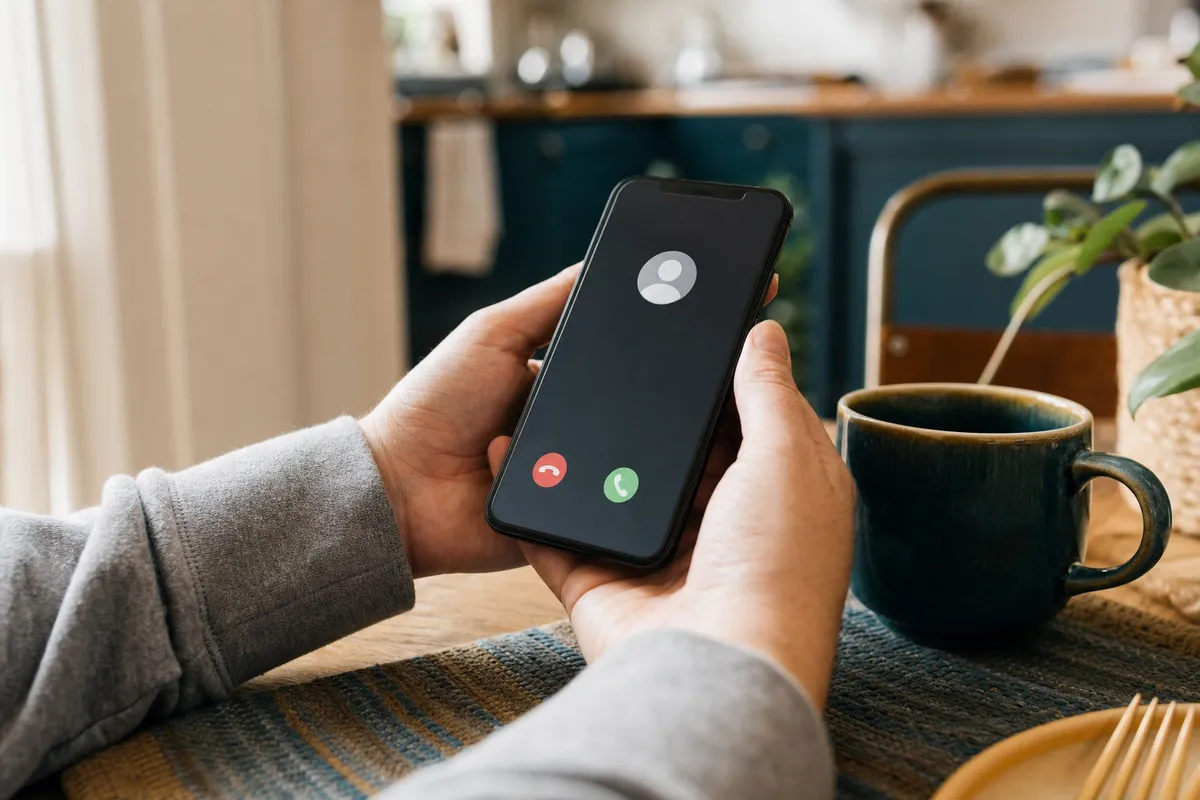
The law that punishes illegal robocalls protects the person being called, not just customers. So when your phone fills up with automated calls intended for a stranger or a previous owner of your number, you may be the one entitled to compensation. This is one of the strongest and most overlooked types of robocall claim.
What counts as a “wrong-number robocall”
A wrong-number robocall is an automated or prerecorded call that reaches your phone but was meant for someone else. It usually happens for one of two reasons:
- Your number used to belong to someone else. Carriers recycle disconnected numbers. If the previous owner gave a company permission to call, or owed a debt, that company’s autodialer may keep calling your line for months.
- A company simply has the wrong number on file. Telemarketers and debt collectors buy and scrape phone lists. Bad data lands their automated campaigns on your phone.
Why you can have a claim even if you were never a customer
Companies are allowed to make automated calls only to people who gave them permission (the law calls this “prior express consent,” meaning you agreed, in advance, to be called). You never gave that permission. The previous owner of your number might have. That consent doesn’t transfer to you, and once you tell them they’ve got the wrong person, any “permission” argument falls apart completely.
That’s why wrong-number cases are often cleaner than other robocall claims: there’s no real argument that you ever agreed to the calls. You didn’t. You’re a stranger to the company, and they kept dialing anyway.
Think this might be you?
Find out free if you have a case — it takes about two minutes and costs nothing.
See if you qualifyWhat it can be worth
The TCPA sets the value of each illegal call by law, so you don’t have to prove you lost money:
- $500 per call or text as a baseline.
- Up to $1,500 per call when the violation was “willful or knowing,” for example when you told them to stop and they didn’t.
These amounts stack. A wrong-number campaign that hits you a few times a week can add up fast, because every single call can count as its own violation.
A real result: In Higgs v. Golden Title Loans (W.D. Tenn., No. 2:20-cv-2559), a person received 385 wrong-number prerecorded debt-collection calls. The court awarded $1,500 per call, $577,500 total.
Prior results do not guarantee a similar outcome. Every case is different.
What to do right now (it helps your case)
- Don’t delete the calls. Your call log, voicemails, and any recordings are exactly the kind of evidence these cases run on.
- Write down what you remember: the number calling, the company name if you can tell, what the recording says, and roughly how often it happens.
- Tell them they have the wrong number if it’s safe to do so. Calls that continue after that can push the value from $500 toward $1,500 each.
- Don’t press buttons to “opt out” of unknown calls. With scam-style robocalls, that can confirm your number is live. When in doubt, keep the records and ask us.
How Max helps, and what it costs you
Max Morgan, Esq. is a Pennsylvania-licensed attorney who handles TCPA cases for consumers nationwide. He reviews your situation for free, tells you honestly whether it’s worth pursuing, and, if you have a case, takes it on contingency. That means his fee comes out of the recovery, not your pocket. No recovery, no fee.
You don’t need to be sure it qualifies. That’s the whole point of the free review: tell us what’s happening and we’ll figure it out with you.
Related: Wrong-number debt-collection calls · Calls after you said stop · What is a robocall? · Robocall settlements

Wrong-number robocall FAQs
Can I sue if I’m not a customer?
Yes, and these are often the strongest cases. The TCPA protects whoever is being called. If a company is auto-dialing or leaving prerecorded messages for a stranger or a previous owner of your number, you can have a claim even though you never did business with them.
What if the calls are for a debt that isn’t mine?
That’s a classic wrong-number case, and it can be illegal under more than one law. See our page on wrong-number debt-collection calls. One of those cases settled for $2.6 million.
Do I need proof of every call?
You don’t need to have everything lined up before you reach out. Your phone records, voicemails, and screenshots help, and there are other ways to establish the calls. Keep what you have and we’ll tell you what matters.
How much could a wrong-number case be worth?
Each illegal call is worth $500, rising to $1,500 if the violation was willful. Because the amounts stack per call, a long-running wrong-number campaign can be worth a substantial sum. In one case, 385 calls came to $577,500.
Is there a deadline to file?
Yes. The TCPA generally gives you four years from the calls. Acting sooner also protects the evidence. See TCPA statute of limitations.
Find out in about two minutes
See if your calls are worth money.
Answer a few questions and Max Morgan, Esq. will tell you, free, whether you have a case. No cost, no obligation, no fee unless you recover.